
Physical Preparation
Speed in Cricket: The Dos and the Dos
Cricket may expose players to speed, but the game is too unpredictable to guarantee the physical qualities they need. Speed should be assessed, trained and developed deliberately.
- Author
- Mathew SkynerHigh-Performance Coach and Founder of CAIRNOX
- Published
- 25 September 2026
- Reading territory
- Physical Preparation
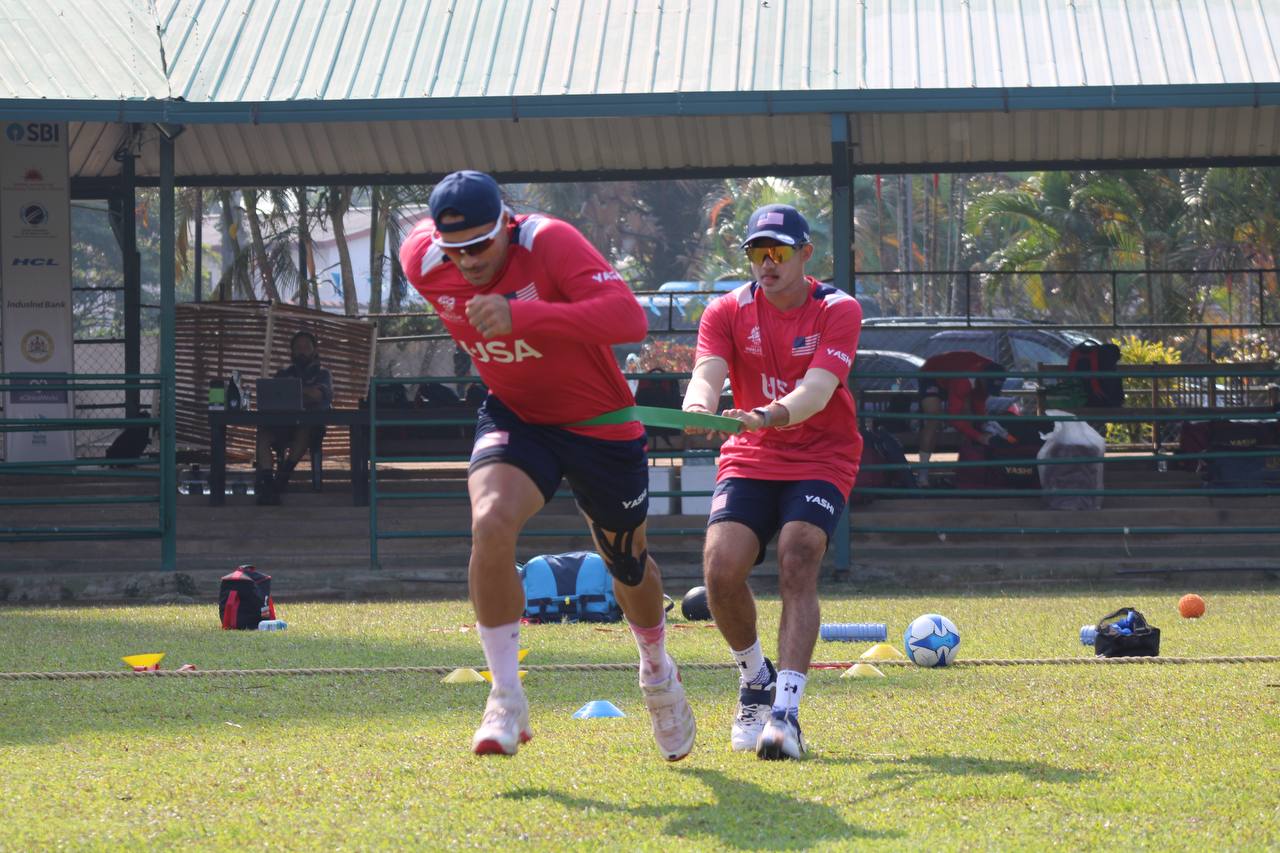
If it is not obvious from the title, do I think cricketers need to be sprinting? Yes.
In fact, I struggle to think of a reason why the answer would be anything else. Speed is one of the most overlooked physical qualities in cricket. When I first moved into an international cricket environment, one of the biggest surprises was how little dedicated speed training existed. There were no dedicated speed sessions, no formal speed testing and very little measurement of speed exposure. Speed largely came through games and fielding drills.
Why matches are not enough
What I can say with certainty is that this is not enough. Games are too unpredictable to rely on for particular exposures. Unless fielding drills are planned well, they typically do not address physical qualities such as lateral acceleration, change of direction and especially maximum velocity.
Take a previous USA Cricket CWCL2 series. In the last game, all of our infielders recorded more than 30 accelerations, yet none had exposure above 85% of maximum speed.
Was that a bad thing? Absolutely not. In the context of that game, it was actually a positive. Our infielders were anticipating well, moving efficiently and preventing balls from getting through the circle.
Good performance does not equal complete exposure
But there is an important distinction here: good performance does not necessarily equal complete physical exposure. We performed well, but we did not expose those players to high-speed running in that game.
“Good performance does not necessarily equal complete physical exposure.”
Why dedicated speed sessions matter
That is why dedicated speed sessions are hugely important in cricket training. Speed is a fundamental quality of the game, and if you do not regularly expose players to it, you should not expect to maintain or develop it indefinitely.
Here is the interesting part: not every game requires the same output, but different demands emerge across a tournament or series. The infielders in that game did not hit top-end speed, but they did during the tour. Different games, different scenarios.
Cricket is a dynamic sport that calls on different abilities depending on the scenario. Every cricketer needs exposure to the fundamental qualities of speed, although the required dose and application will differ by player and role:
- Acceleration
- Change of direction
- High-speed running
Being fast to a ground ball can be the difference between one run and two. A keeper's ability to move quickly towards a loose ball can prevent runs from leaking. A batter's ability to take off from the crease can pressure fielders into making mistakes.
One of my first interventions with USA Cricket was to introduce dedicated speed sessions and measure those outputs. Speed is not about one-off scenarios we can disregard. It is fundamental to the game. Every ball, every run, every over matters.
Do not leave speed to chance
The crux of it is simple: speed is not something we should hope to see in cricket. It is something we should deliberately develop.
Games will provide speed exposure—sometimes a lot, sometimes very little. Fielding drills can provide it too, when they are designed with the physical objective in mind. But neither should be left entirely to chance.
If speed is an important quality in cricket, it deserves the same intentional approach we give strength, conditioning or any other physical quality.
- Assess it.
- Train it.
- Expose it.
- Adapt it.
Because speed is not just something that happens in cricket. It is something you train for.